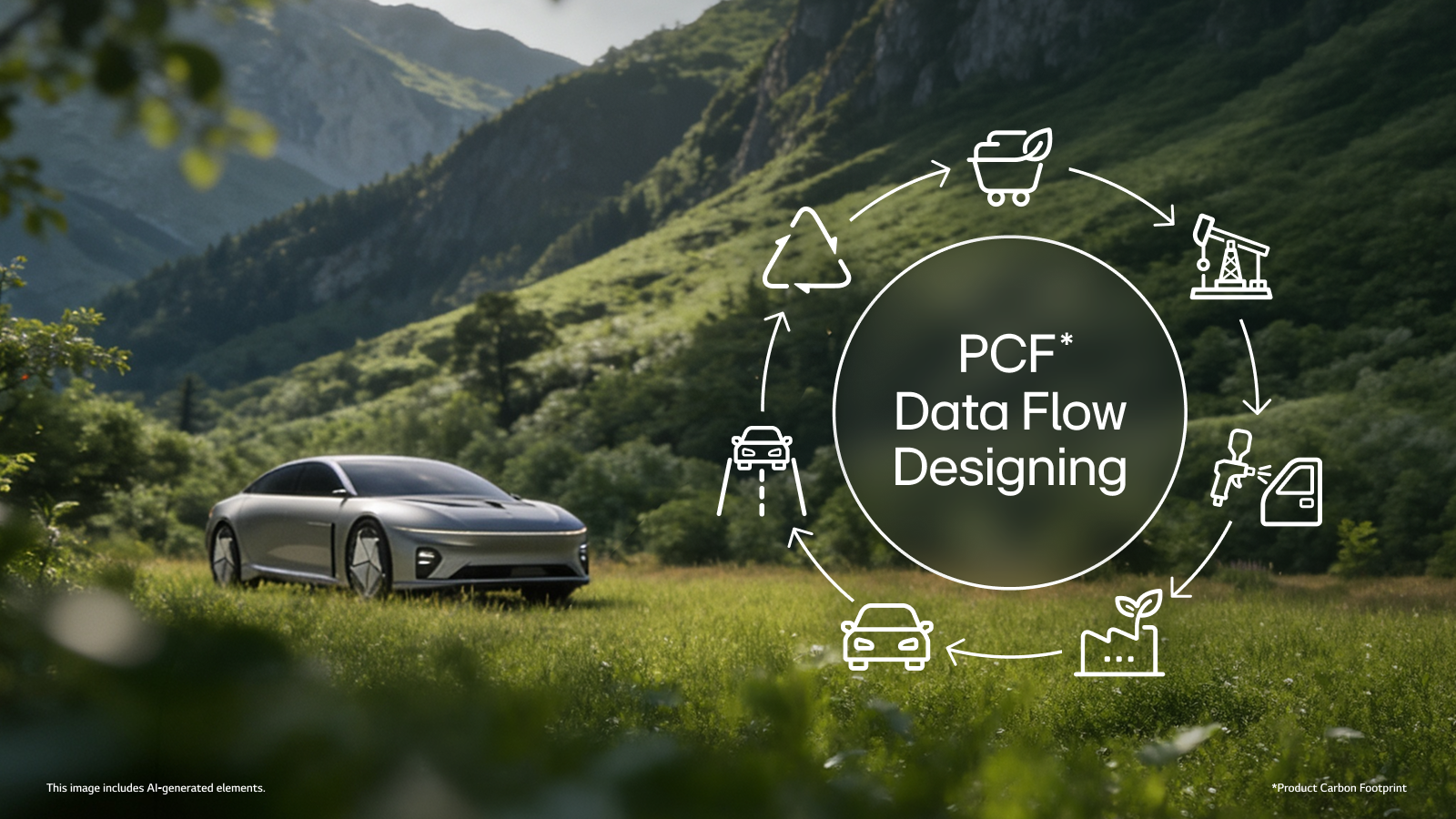
In the European automotive industry, sustainability expectations are moving beyond corporate-level commitments toward more reliable product- and component-level data. Product Carbon Footprint (PCF) sits at the center of this change, providing a measure of the carbon emissions generated across the production process, from raw material sourcing to manufacturing.
Major automakers have recently strengthened their policies and processes, requiring standardized PCF data as part of supplier selection and collaboration. At LG Electronics (LG), we see this trend as a signal that PCF data is likely to become an industry-wide standard and an important factor in supplier competitiveness.
Many Regulations, One Clear Requirement: Explain It With Data
The EU’s environmental and climate policy has steadily moved from broad goals to more binding regulatory requirements, with the EU Green Deal setting the long-term direction for a more sustainable European economy.
This direction has led to a series of regulatory initiatives, including Fit for 55,1 the EU Battery Regulation (EUBR) ((EU) 2023/1542),2 the Ecodesign for Sustainable Products Regulation (ESPR)3 and the Corporate Sustainability Reporting Directive (CSRD).4 Although these regulations differ in focus and scope, they are creating a more consistent expectation across industries: companies must be able to manage, explain and exchange PCF data at both the corporate and product levels.
This shift extends beyond companies based in the EU. Since 2026, certain products exported to the EU – including steel, aluminum, cement, fertilizer, electricity and hydrogen – have been subject to the Carbon Border Adjustment Mechanism (CBAM).5 Importers will be required to purchase and submit CBAM certificates based on the carbon emissions generated during production. Carbon data is no longer merely information to be included in reports; it has become a factor that directly affects transaction terms and costs.
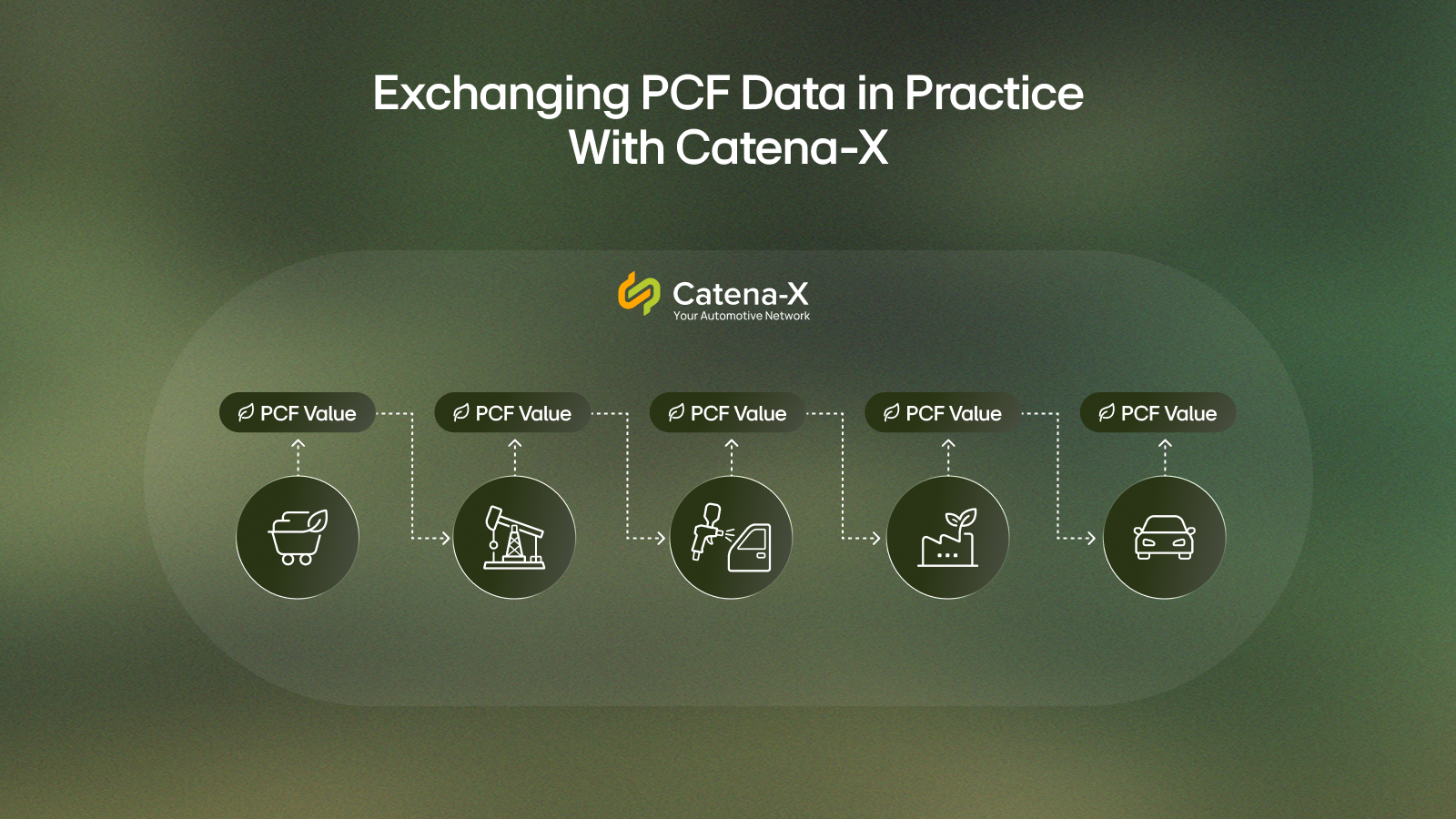
In the automotive industry, product-specific figures must now be supported by connected data across the supply chain, from raw materials to parts and finished vehicles. This structure is taking shape through the Digital Product Passport (DPP), an electronic passport containing product-level PCF data. Starting with batteries in 2027, it will gradually become mandatory for major export items such as textiles and electronics, shifting sustainability from a claim to something companies must prove with data.
PCF Data as More Than a Reporting Figure
As the EU’s approach to PCF regulation develops alongside broader manufacturing innovation, particularly Industry 4.0,6 PCF data is becoming operational information that moves through manufacturing and supply chain systems, rather than remaining limited to reporting. This makes data spaces,7 standardization and interoperability key elements of future PCF management, allowing companies to generate and exchange data through shared systems instead of relying only on separate calculations after production.
In this context, PCF data is evolving into a business tool that can support everyday business decisions across process improvement, material selection and supplier comparison. As production processes change, companies need to continuously manage, explain and verify when and where the data was generated, and under what conditions.
The Real Challenge Is Evidence, Not Calculation
At LG, we recognized that the challenge is not an inability to calculate PCF information. The real challenge is ensuring the source and reliability of the data, which requires evidence, traceability and connectivity.
Many PCF figures still rely on secondary data based on industry averages instead of primary data generated from actual manufacturing sites. As a result, process improvements may not be reflected quickly, customer audits may need additional explanation and supplier comparisons can become more difficult. In these cases, PCF remains a number to be explained rather than a tool for decision-making.
Some European OEMs are already testing PCF data exchange within their supply chains, but readiness varies among lower-tier suppliers. Many still lack the systems, experience or internal standards needed to manage and exchange product-level carbon data, creating a gap between fast-moving OEM requirements and the pace of the broader supply chain.
This places Tier 1 suppliers in an important position to help connect OEM requirements with real supply chain operations. At LG, we recognized that European OEM expectations would need to be translated into proactive operational capabilities, regardless of regional differences in readiness.





![[Executive Corner] The Aesthetics of Spatial Integration: The Philosophy Behind LG’s Built-in Appliances](/content/dam/channel/wcms/global/newsroom/lg-story/beyond-news/executive-corner-the-aesthetics-of-spatial-integration-the-philosophy-behind-lgs-built-in-appliances/main-image-desktopmobile-designlab-464.png)